Inquiry-Based Instruction

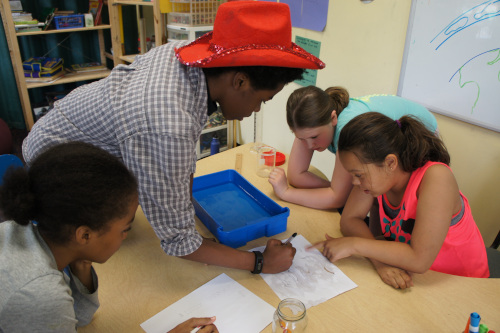
Inquiry-based instruction looks quite different to the traditional lessons in which the teacher presents information to the students in class. During an inquiry class, teachers present you with problems, and in the process of solving them, you ask questions, figure out the answers, and look deeply into the issues involved. As you do so, you make the neural connections in your brain so that you not only understand the topic on a much deeper level, but you also remember it for much longer, often for the rest of your life.
Inquiry-Based Instruction

Inquiry-based instruction looks quite different to the traditional lessons in which the teacher presents information to the students in class. During an inquiry class, teachers present you with problems, and in the process of solving them, you ask questions, figure out the answers, and look deeply into the issues involved. As you do so, you make the neural connections in your brain so that you not only understand the topic on a much deeper level, but you also remember it for much longer, often for the rest of your life.

Inquiry-Based Instruction

Inquiry-based instruction looks quite different to the traditional lessons in which the teacher presents information to the students in class. During an inquiry class, teachers present you with problems, and in the process of solving them, you ask questions, figure out the answers, and look deeply into the issues involved. As you do so, you make the neural connections in your brain so that you not only understand the topic on a much deeper level, but you also remember it for much longer, often for the rest of your life.

Best way to educate a child is to

educate the parents

Best way to educate a child is to

educate the parents

What is Reggio Emilia?

It is a town in Italy that created pioneering schools for young children which have been so successful that Newsweek recognized them in their list of the ten best schools in the world. The approach these schools use is more of a philosophy than a set of rules or instructions.

Our Elementary School is Reggio-inspired

Our program has always been deeply grounded in the idea that children are naturally inquisitive, powerful, and rich in potential, and that they have an innate desire to grow and learn.

Learning is student-led

The curriculum is based upon the naturally-arising interests of the children. As with all age groups at Longview, there is a focus on building skills, and our talented teachers do so based upon the topics that emerge in the time spent with the children.

Small Classes

Class sizes range from 2 to 8 students allowing each student to get a personalized education right at their level
Click

Real World Application

In classes, academic material is tied to real world applications. Outside the classroom, students learn real-world skills by holding Clerkship positions in the school and internships out in the community

Project Based Learning

Classes use inquiry-based instruction in conjunction with hands-on projects instead of focusing on lecture-driven teaching

Interest-based Classes

In classes, academic material is tied to real world applications. Outside the classroom, students learn real-world skills by holding Clerkship positions in the school and Iinternships out in the community

Whole-child, Skills-based Learning

Students learn not only academic skills but also interpersonal, socio-emotional and organizational skills. There is a focus on students becoming practitioners of each discipline, so that our students learn to be scientists, historians, artists and mathematicians, as well finding a place for reading and writing in their lives

Mentorship

Each student has a teacher mentor who they meet with each week to get support with organization skills, keeping caught up with assignments, goal setting, self-regulation, planning for the future planning, interpersonal skills, etc

Student Empowerment

Longview is an egalitarian school community in which all community members, students, and teachers alike, are equally empowered. All the rules are made in the one person, one vote democratic School Meeting. All the rules are enforced by the Judicial Committee, our student court. Everyone is equally respected and listened to, regardless of age, race, religion, gender, or sexual orientation.
Scroll to Top